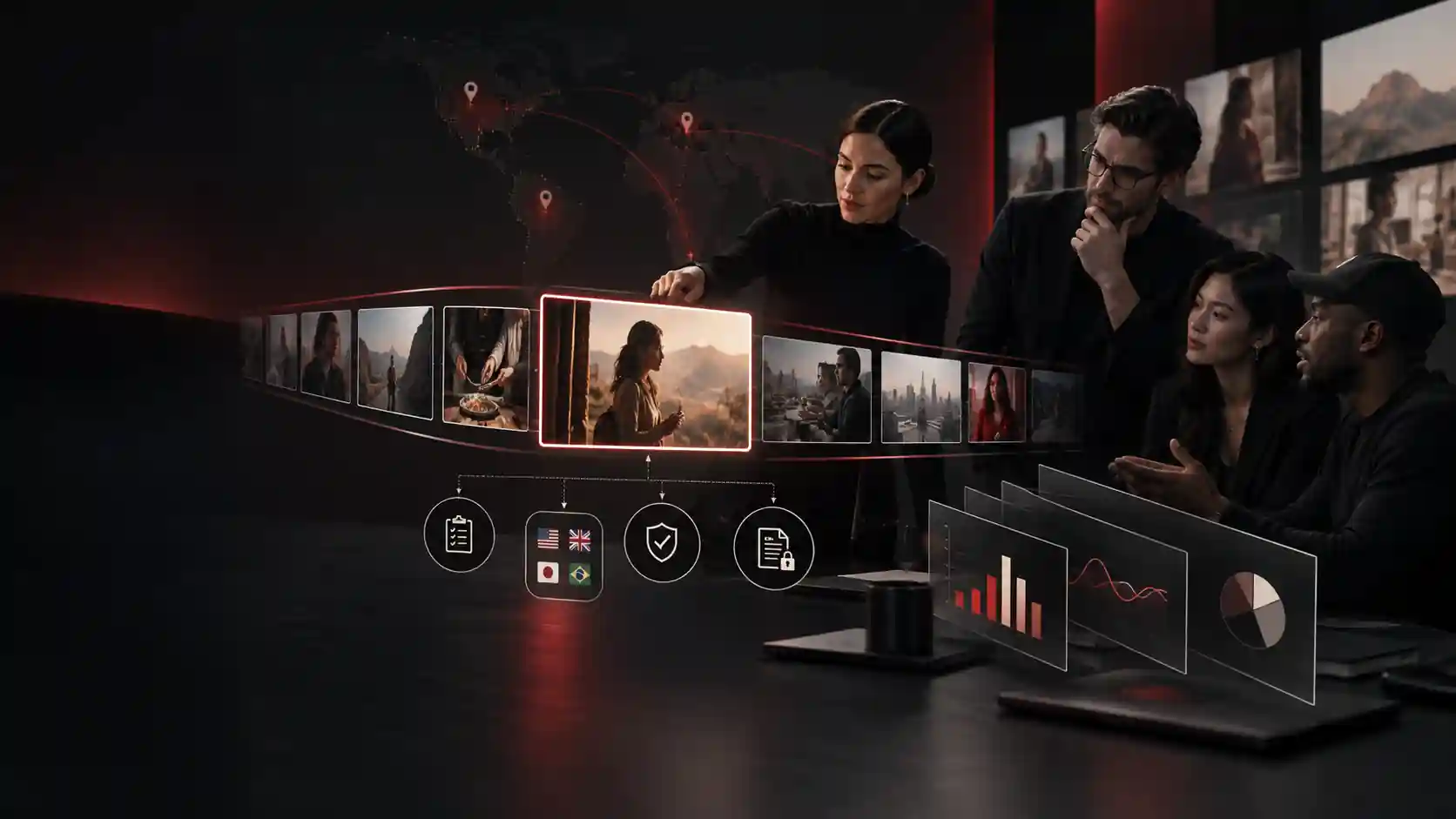
The answer first: this is flexible creator inventory, not a universal ad format
YouTube dynamic brand segments let an eligible creator insert, update or remove a separately uploaded branded segment inside selected long-form videos. YouTube says the current 2026 programme is invite-only. The creator can select eligible host videos, schedule dates, limit delivery by country and keep the segment's metrics separate from the host videos. That creates a new commercial asset: access to a qualified creator library without permanently editing the same sponsorship into every video.
The opportunity is real, but an invitation is not a media plan. Device support is still rolling out, eligible creators and videos must meet current requirements, the brand must approve the request, and the segment must clear policy review. A brand should therefore treat the format as a controlled pilot with explicit stop conditions, not as guaranteed inventory available across every channel, market or screen.
Source boundary checked on 20 November 2026: YouTube's creator setup guide describes selecting up to 20 host videos, while a Google Ads example refers to 20 or more. These descriptions do not establish a universal inventory limit. Record the limit actually available in the participating account and obtain confirmation before contracting a larger library. The creator guide still describes an invite-only pilot; this article does not treat broad advertiser examples as proof of universal access.
Choose the right product before negotiating the price
Three products can look similar in a proposal while creating different obligations. A permanent creator integration is edited into the host video and remains part of that asset unless the creator changes the video. A dynamic brand segment is a separate creator-led file inserted into eligible long-form videos for defined dates and countries. Creator Partnerships Boost uses approved creator content as paid advertising inventory. These options may work together, but they should not be quoted, licensed or measured as one undifferentiated line.
Use a permanent integration when the brand story should remain part of one video and the content benefits from that narrative context. Use a dynamic segment when the value comes from a proven library, replaceable timing or country-specific delivery. Use Boost when the brand needs advertiser-controlled paid reach beyond the creator's organic delivery and has secured the necessary rights. If the team cannot explain which of these decisions it is buying, the scope is not ready for approval.
- Permanent integration: buy one host video, one embedded message and a clear live-term or edit rule.
- Dynamic segment: buy a segment master plus access to a named eligible video library, countries, dates and insertion controls.
- Creator Partnerships Boost: buy or license paid-media use, account linking and advertiser-side campaign delivery as a separate layer.
Qualify the creator library, not only the creator profile
YouTube's creator guidance currently requires the segment video to be 30 seconds to three minutes, unlisted, monetisation off and creator-led. The host video must be long-form, at least eight minutes, monetised and configured for mid-rolls. A brand cannot infer useful inventory from subscriber count alone. It needs a dated list of eligible host videos and evidence that the audience, topic and remaining traffic pattern fit the brief.
Review the library at asset level. Separate recent uploads from older evergreen videos, identify topic and audience fit, note brand-safety or claim risks, and confirm whether the intended insertion point preserves the logic of the host video. A strong old video can provide durable attention; it can also carry outdated product references, a different audience mix or context that makes the new segment feel misleading. The library should therefore be accepted as a versioned media list, not as open-ended access to a channel.
- Video ID, title, publish date, current topic and eligibility status.
- Target country, delivery window and proposed insertion slot.
- Recent traffic quality and any seasonal or event dependency.
- Conflicts with competing sponsors, sensitive claims or unsuitable context.
- Named replacement rule if a host video becomes unavailable or inappropriate.
Contract the segment and the library as two linked objects
The segment master needs its own creative scope: creator identity, script and product claims, duration, disclosure, music and third-party materials, allowed edits, localization, start and end dates, destination and approval owner. The library allocation needs a different scope: eligible host videos, insertion positions, countries, planned dates, replacement conditions and what happens if a video is removed, restricted or falls outside the agreed context.
Platform approval does not replace commercial permission. Google Ads explicitly says brands need the proper rights before using a segment as an ad, potentially through a separate creator agreement. Keep organic dynamic delivery, file licensing, derivative editing, localization and Boost rights as separate permissions. A brand adding a country, extending the date, changing the segment or moving into paid amplification should reopen the relevant approval instead of assuming the first acceptance covers every future use.
Also define cancellation and evidence retention. YouTube lets creators cancel or delete a dynamic segment record; deleting partnership details from Studio is not recoverable there, although a copy remains visible to the brand in Google Ads. Both parties should preserve a minimal release record outside the platform: approved files, video list, countries, dates, visible disclosure, request status, policy decision and final delivery export, without storing passwords, tokens or unnecessary account data.
Do not combine three different measurement ledgers
The dynamic segment is uploaded as a separate video, so its views are not the same as views of the main video. A viewer can watch the host video and skip the inserted segment; that produces a host-video view without a segment view. Google Ads lists segment-level impressions, public views, engaged views and TrueView measures, while YouTube says the creator's overall host-video analytics and revenue remain private. This boundary should be visible in the report rather than reconciled into a fabricated total.
Create three ledgers. The segment ledger records its delivered impressions, views, engaged views, dates and countries. The host-video ledger checks whether the chosen library remained live, suitable and commercially healthy, using only data the creator agreed to share. The paid-media ledger records Boost impressions, spend, clicks, conversions and experiment results from the advertiser account. Link the ledgers with segment and host-video IDs, but never overwrite one source with another.
Two limits matter for investment decisions. Google Ads says several campaign-table cost, budget and bidding fields can be broken for dynamic brand segments because Google is not involved in the creator payment. It also says Brand Lift and third-party measurement are not supported for the dynamic format. Do not manufacture cost efficiency from incomplete platform fields or claim incremental effect from delivery data alone. If paid Boost is added, evaluate it under its own campaign and experiment design.
- Segment delivery: what ran, where, when and how much of the segment was viewed.
- Host-video health: whether the selected library remained available, relevant and safe.
- Paid amplification: what advertiser-controlled delivery and outcomes occurred after Boost was activated.
- Business evidence: any qualified action measured with a stated source, window and uncertainty.
Run a seven-gate pilot before scaling the library
A practical first pilot can use one creator, one segment master, three to five eligible host videos, one market and one defined window. This is large enough to test library fit and operational handoffs without turning an invite-only product into an uncontrolled channel rollout. The release sequence should be visible to procurement, creator management and paid media before any campaign goes live.
Stop if the live account lacks the expected controls, a host video is ineligible, rights or disclosures are incomplete, the segment conflicts with the host context, the brand request is not accepted, policy review fails or the measurement export cannot separate the segment from the host video. A clean stop is better evidence than a campaign that launches with an untraceable scope.
- Confirm creator and advertiser eligibility in the live accounts.
- Approve the segment master, claims, disclosure and third-party rights.
- Freeze the eligible host-video list, countries, dates and insertion slots.
- Accept the brand request and capture the exact approved state.
- Wait for policy approval and verify the segment on supported viewing surfaces.
- Export segment delivery separately from host and paid-media evidence.
- Renew, replace or stop only against the pre-agreed decision rule.
What a scalable buying record should answer
Before approving a second creator or another market, the team should be able to answer one page of questions: What asset is being bought? Which videos and countries can carry it? Who can change, cancel or replace it? Which rights apply to dynamic delivery and which apply to paid amplification? Which metrics are actually available? What evidence would justify renewal? If those answers exist in one dated record, the format can become a repeatable buying unit rather than a one-off platform experiment.
The strategic value is not merely that old videos can host new sponsorships. It is that creator trust, catalogue context, geographic delivery and advertiser measurement can be contracted as separable decisions. Brands that preserve those boundaries can learn whether a library is useful without confusing platform access with rights, delivery with lift, or a pilot invitation with universal scale.
Sources
Sources checked 2026-11-20. This analysis uses the following official platform materials and StarGemini's global creator-program operating perspective.
This article uses an AI-assisted research and editorial workflow, with factual claims checked against the cited sources. Industry interpretation reflects StarGemini's creator-marketing operating method.
STARGEMINI MEDIA LIMITED